
Okay, folks, buckle up, because we're diving deep into the wild world of altcoin ETFs—and trust me, there's more here than meets the eye. Forget the daily price swings for a minute. The real story isn't about whether XRP is up 7% or Solana is down 5%. It’s about what these ETFs represent: a fundamental shift in how institutional money views—and interacts with—the entire crypto space.
The TradFi Floodgates Are Opening
Think about it: not long ago, the idea of a major financial institution even touching something like XRP or Solana would have been laughable. Now? Franklin Templeton is launching an XRP ETF, XRPZ, on the New York Stock Exchange Arca. That's not just a toe in the water; that's a full-on cannonball into the deep end!
And sure, there are always naysayers—those who see these inflows as just a temporary blip, a "fleeting fad" as some headlines might suggest. But I see something far more profound. Alexis Sirkia, Chairman of Yellow Network, put it perfectly when he said these ETFs are "like pipes that connect the massive reservoir of TradFi to the digital asset ecosystem." These "pipes" aren't just moving money; they're moving legitimacy. They're signaling to the world that crypto, while still volatile, is here to stay.
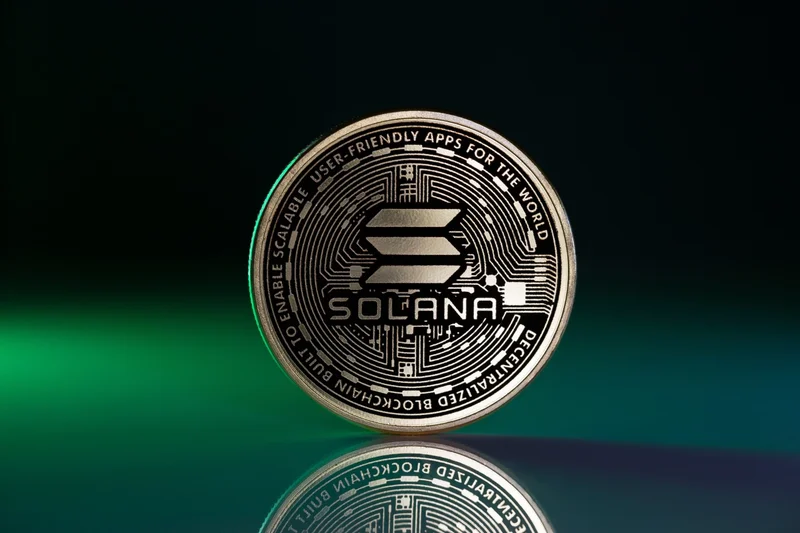
The numbers themselves are compelling. Spot Solana ETFs have pulled in over half a billion since launching in late October, with 20 consecutive days of net inflows. [Source Article: Spot Solana ETFs log 20 consecutive days of net inflows since debut] Solana ETFs have attracted $843.81 million in total net assets since their inception. XRP ETFs have raised $628.82 million. Now, I know what you might be thinking, and no, these numbers don't lie. What this means for us is a new era of accessibility, but more importantly, what could it mean for you?
But let's be real: it's not all sunshine and roses. There are challenges, and it's crucial to acknowledge them. We've seen how easily vulnerabilities can creep in, like that malicious Chrome extension injecting hidden Solana transfer fees into Raydium swaps. [Source Article: Chrome Extension Caught Injecting Hidden Solana Transfer Fees Into Raydium Swaps] It's a stark reminder that as this space matures, security and vigilance are paramount. We need to be aware of things like Crypto Copilot injecting an extra transfer into every Solana swap, siphoning a minimum of 0.0013 SOL.
And there's the ever-present regulatory uncertainty. Czhang Lin, head of LBank Labs, points out that XRP's regulatory optimism is a major draw for capital. But what happens if that optimism fades? What happens if the regulatory landscape shifts? These are the questions we need to be asking.
Still, the overall trend is undeniable. Institutional interest is growing, and it's not just about Bitcoin and Ethereum anymore. Altcoins are stepping into the spotlight, and ETFs are paving the way. We're seeing a selective appetite, as Rachel Lin, CEO and Co-Founder of SynFutures, suggests: "Altcoins with strong structural stories and institutional access have a good chance of outperforming into December, but it’s not a guarantee of an across-the-board altseason."
Think of this moment like the early days of the internet. Remember when people dismissed it as a passing fad? Remember when dial-up was the norm, and websites looked like something out of a bad science fiction movie? We're at a similar inflection point with crypto. The infrastructure is still being built, the regulations are still being ironed out, and there will undoubtedly be bumps along the road. But the underlying potential is undeniable.
The Future is Being Written in Code
This isn't just about making money; it's about building a new financial system—a system that's more accessible, more transparent, and more equitable. And honestly, when I first saw the news about Franklin Templeton getting involved, I just sat back in my chair, speechless. This is the kind of breakthrough that reminds me why I got into this field in the first place. The pace of innovation is just staggering—it means the gap between today and tomorrow is closing faster than we can even comprehend. It's a bit like the invention of the printing press, only instead of democratizing information, we're democratizing finance. What a time to be alive.